
BLOG

We zoom through our lives worrying about everything and everyone else and somehow we seem to forget how our well-being affects our everyday life, so it is essential to look after ourselves.These blogs help people with empathy and connection, encouraging self-care and promoting wellness. Our blogs help readers think about the decisions they make and the habits they have. This self-reflection can result in change, if you provide resources and tips for adopting healthier habits.
| |
Latest Blogs & Videos

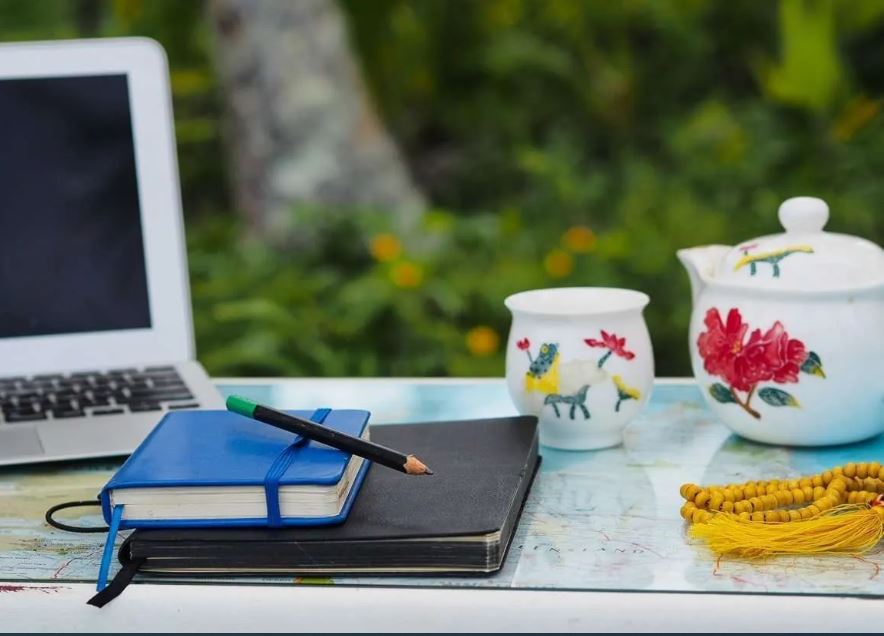 Writing for Wellbeing: Why Writing is Good for You
We are narrative beings: stories create meaning
What makes writing for wellbeing so effective is how we use narrative to create meaning for ourselves. Our identities are made up of the stories we tell about who we are, what has been and where we are headed.
Think about it. How do you introduce yourself to a stranger? How does the story you tell about yourself at a dinner party differ from the official self-narrative you would share with a colleague?
Every day in our heads and hearts we edit and rewrite our self-narratives as we travel on the roller coaster of life. But we tend to be harsh storytellers of our personal narratives. We let our inner editor sabotage us into crafting negative self-narratives. If something didn’t work out, we are a failure. We chisel away at our self-confidence about shattered dreams and missed opportunities. Setbacks can keep us frozen in negative self-narratives, sometimes for a lifetime. Sounds familiar?
Here’s the good news. Writing is a way of letting go of everything that no longer serves us. We release untold stories. We name painful emotions. And then we turn the page of our journal and write on.
When we write our thoughts and feelings down, honestly and raw, we gain insight into our motivations and actions. We learn to say “Ah, I can see now why …”. That is when we will be able to write new, healthier, self-narratives. Writing showed me that my perfectionism was holding me back. When I began to silence the inner editor, I allowed myself to write with more self-compassion about my personal story. My regular, 10 minutes free-writing sprints have made me gentler and more forgiving towards myself. My inner dialogue has become softer. Less critical, more joyful.
We are the authors of your lives
We are in charge of the narratives we tell ourselves. Learning to be the authors of our lives means accepting that we are in charge of how we shape the raw material of our lives into tender tales of redemption. Errors we’ve made and obstacles we’ve overcome can become important turning points that allow us to grow and learn.
When we are in the midst of an emotional crisis, stuck in a narrative of despair, it is often hard to see the complete picture.
Writing forces, us into the witness position. By naming and describing our emotions, by sorting what is messy into sentences and stories, we can gain clarity, insight and a new perspective on our inner narrative. We become at once witness and author.
Personal writing is good for you: it’s a practice in self-care
Writing for wellbeing is a way of checking in with our self-narratives. We process what is messy and painful, we name our fears, hopes and desires and we learn to identify where we need to edit our personal stories and which stories are holding us back.
In my writing classes I do a lot of timed free-writing exercises to prompts. Free-writing, without thinking or editing, helps to silence the inner critic. It’s a way of getting to the unedited version of ourselves. But writing also weaves meaning in our lives. It allows us to combine the fragments of our many selves into a coherent narrative.
A regular personal writing practice can teach us how to ask questions that provide the answers we need to craft stories that will carry us forward to the next chapter.
Writing for well-being is fun
Especially when we just write for ourselves to short writing prompts. Connecting with our creativity keeps us young. We are like children in the sandbox, playing and exploring. The letters of the alphabet are our toys.
It is no wonder that writing for wellbeing is attracting a lot of publicity these days. It must be the world’s oldest self-help tool. It is definitely the cheapest.
Knowing that writing is always going to be there to anchor and guide me, makes me feel safe and grounded. And it comes at the cost of a pen and a piece of paper!
What is your relationship with writing? Do you use a journal to work things out and improve your well-being?
Sorrow & Trial - Words from Ruhiyyih Khanum
Ruhiyyih Rabbani, born Mary Sutherland Maxwell and affectionately known by the title Amatu’l-Baha Ruhiyyih Khanum, was the Handmaiden of Glory; the beloved consort of Shoghi Effendi; and a Hand of the Cause of God.
EXTRACT (lightly adapted for readability and shared courtesy of the Baha’i World Centre):
“No matter how easy or luxurious [life] may be made, it still brings in its wake inevitable hardship and struggle.
We must recognise that under duress great things are born. Diamonds form in molten rock. The sweetest flowers of man’s spirit have often been watered by tears. To struggle gives strength, to endure breeds a greater capacity for endurance.
We must not run away from our heartbreaks in life; we must go through them, however fiery they may be, and bring with us out of the fire a stronger character, a deeper reliance on ourselves and on the Creator…
Love, hate, passion, fear, sorrow, pain—they act on us and spur us on, they develop our qualities and give us colour and individuality. Why should we want to shun and abolish [that which brings] out the best in us, that tempers our steel, that teaches us to value happiness at its true worth? Can a man who has never been hungry in all his life know what a piece of bread means, savour all its sweetness, as can a man who has starved?
We are not expected to like suffering […] but we should, when the cup is at our lips and we have no choice but to drink it, drink it down strongly and courageously, knowing it will hurt but strengthen, wound but eventually heal…
We must also accept the fact that there are some things in this life we are not going to be able to understand here and now. They are mysteries either too profound, or denied us to comprehend in this world.
But it is given to us to understand certain things […] God, with all that term implies, cannot be unjust any more than He can be unloving. Nothing could be more unjust or unkind than to set a man an impossible task, to require of him something beyond his strength to do.
The trials that come to us in life come to test our strength and to exercise and perfect it. We are not set tasks that we cannot accomplish, we are not tyrannized over by God. … He sets the hurdle a little higher because He knows we are now ready to make that jump if we try, and what is more, He will help us.
The Friend of the soul of man is there and He wants us to win, to grow strong, to be worthy of the heritage He has prepared for us; He is therefore ready to lend a helping hand if we call Him; if we fling out ours towards His, He will grasp it firmly.”
You can find a copy of Prescription for Living from a variety of book retailers
Thankful in Adversity - Malini Parker's Story
Malini Parker, a scientist-turned-artist living in Perth, shares with us what facing adversity has helped her understand and how art enabled her to navigate times of hardship. In a sense, art saved Malini’s life and spared her from experiencing true loss.
Find out more about  Malini’s art and the courses she offers by visiting her website.